
Description
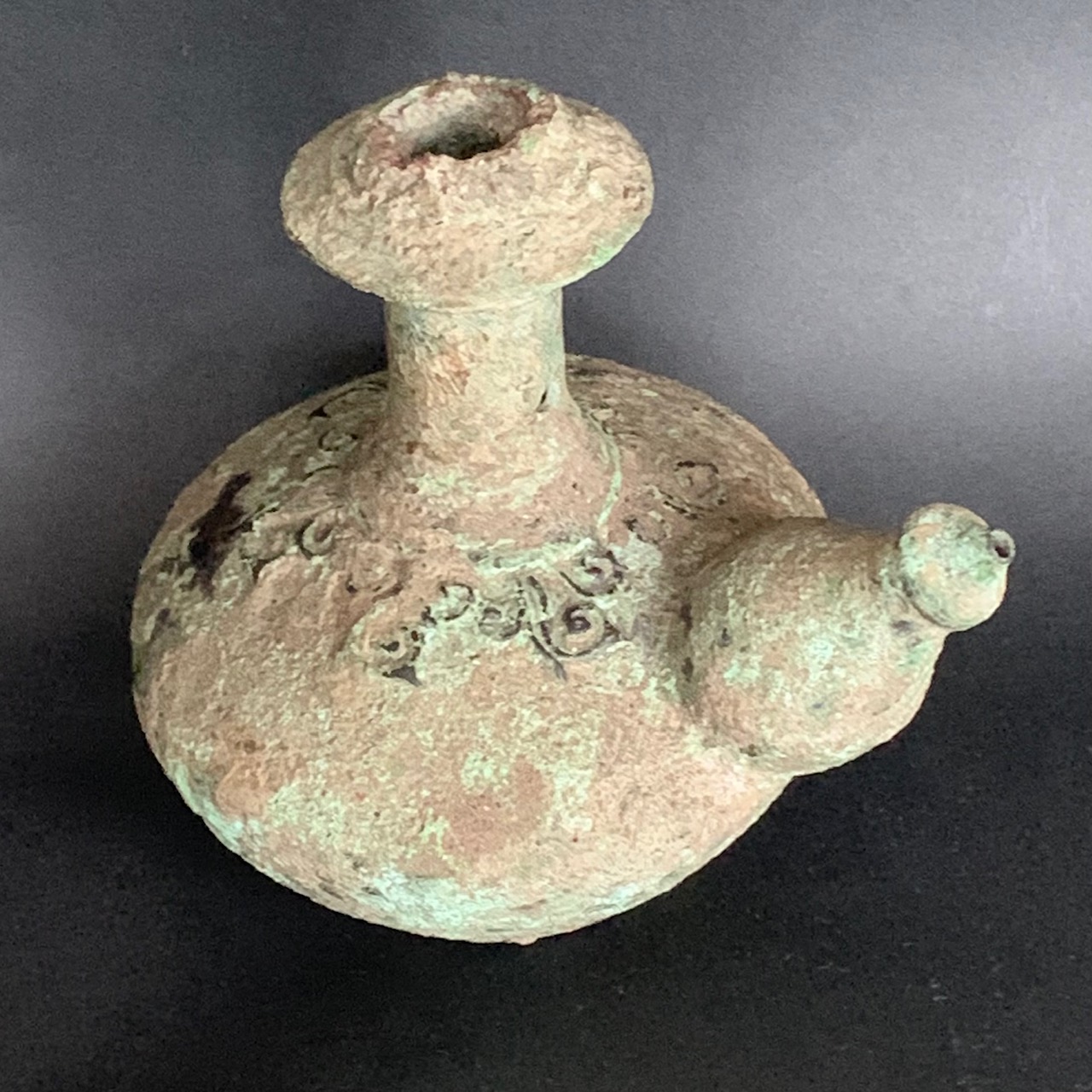
13th / 15th Century Bronze Majapahit Empire Kendi Drink Vessel
Region: East Java Indonesia
Majahapit Period: 14th / 15th Century
Height: 16cm
Length: 16cm
Diameter: 15.5cm
Weight: 1.250 Kg
This authentically ancient kendi was excavated in the locality of the former Majahapit Empire – 13th / 15th Centuries. It is very possible that this kendi may well be several centuries older…
Metal kundika (Tang Dynasty 618-906) preceded the kendi though of a similar design. Within Southeast Asia, the kendi does appear in scenes carved in relief on the walls of the ninth century Mahayana Buddhist temple of Borobudur in central Java.
Little evidence prior to the Tang Dynasty exists to support either the wide or extended use of the kendi in Southeast Asia, however by the end of the first millennium it was the preferred form of spouted vessel. The popularity of one type over the other is probably related to the different function of the vessels. The kundika was made of precious metal and used as a container for holy water in rituals and ceremonies associated with deities and royalty, whereas the function of the unglazed terracotta kendi vessel had a broader use that extended to everyone, not just the elite. It could be produced economically from local materials
Kendi’s are a well-known form in the Southeast Asian repertoire of vessels, and it has played a significant role in the rituals and daily life of the region ever since ancient times. Kendi’s made of unglazed fired clay have a long, continuous history of use as a humble, utilitarian vessel that was ideal for its cooling properties and for its portability, such as carrying water when travelling from village to village or for a longer journey by boat.
To drink from a kendi, grasp the neck with one hand; place the other on the base for support if desired; hold the vessel away from the body, point the spout towards the mouth and slowly tilt it to start the water flowing. As the lips never touch the spout, the kendi is a hygienic and convenient communal drinking vessel.
For many centuries this ancient bronze Kendi drinking vessel was below ground. Its eroded condition is commensurate with the conditions that it was found. Please view all of the photos…